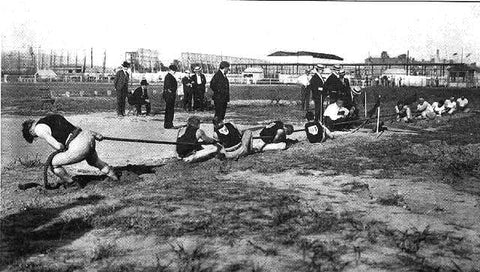
Letting go is hard—sometimes it feels impossible. For years, I gritted my teeth and held on to what I thought was right. Life was black or white, good or bad, and I was determined to stick to my way, no matter what the cost. And trust me, it cost plenty: friendships, loved ones, losing pets, broken teeth (and almost a broken nose), and more dollars than I care to count. Even after I started focusing on recovery, I kept paying the price—lost time, my career, my art, my family, even my home.
Things have shifted over the years. I’ve softened up some, and I realize now that recovery isn’t about being perfect or getting everything right. It’s messy and unpredictable, and I’ve learned that the hard way—slow as molasses. I still catch myself running too hard, taking on everyone else’s stuff and forgetting to check whether any of it actually belongs to me. I’ve always thought of myself as determined and ambitious—that’s great, but not if I’m hauling around baggage that isn’t mine.
So now, when I feel weighed down, I ask myself: what have I been picking up along the way, and does it even belong to me? If not, how do I let it go—and lighten my load? I have to recognize it first, develop some awareness. I spend my days supporting people and letting others support me, and it’s a beautiful thing. But there are times when I still get snagged, no matter how much practice I’ve had.
That’s when vulnerability steps in. I let myself be honest, even when it’s uncomfortable. Humility follows, and I remind myself: I can only do my best. If I’m tangled up in someone else’s mess, I can’t even do that. As a peer, this is huge—hanging onto stuff that’s not mine is a straight shot to burnout. So I listen for that small voice that says, “It’s not your stuff man, let go of that.” I step back, check in with myself: Have I supported this person, situation, event, etc.. without doing it for them? Have I been respectful, put my best foot forward? Is this even my lane? If not, I need to get out of the way and focus my energy elsewhere. I like my teeth, and I plan to keep what left of them for as long as possible.
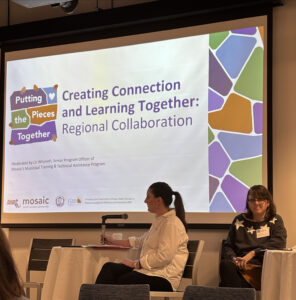
Putting the Pieces Together

Above; Julie Burns , RIZE MA
Above; Julia Newhall BSAS & Sarah Ahern from Choice Recovery Coaching.

Above; Frankie Martinez, Enlace De Familias de Holyoke & Zenaida Smiley Choice Recovery Coaching

Above; Kristen Paquette C4 & pAUL aVLES Choice Recovery Coaching
RIZE MA hosted a day of connection, collaboration, and action to honor the $15M Mosaic Opioid Recovery Partnership which is supporting community-led initiatives across Massachusetts.
CHOiCE Recovery Coaching is honored to be a part of this incredible group of organizations who are inspiring hope across the Commonwealth.
Thank you RiZE MA!!
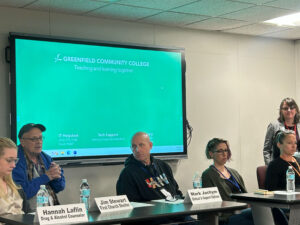
Franklin County and North Quabbin
2025 Harm Reduction Summit
Friday, October 24, 2025 at Greenfield Community College
The day featured engaging morning workshops and powerful afternoon panels – all centered on learning, collaboration, and building stronger bridges within our communities. -An amazing day filled with insight, connection, and meaningful conversations around recovery AND harm reduction!
Your Next Step in Recovery Learning Starts Here

This training is designed to equip Recovery Coaches with the tools, knowledge, and confidence to better support the individuals we meet on their recovery journeys.
As Recovery Coaching continues to grow in both the Medical and Behavioral Health fields, it’s important that we strengthen our understanding of those facing Mental Health challenges along with Substance Use Disorders.
Explore which tools coaches are currently employing and which ones they may need to pick up. Review their purposefulness within supervisory practices.
Explore additional tools and strategies used to coach recovery and the methods used to implement them in your peer supervision practice.
Explore where the recovery coach might intersect with trauma and identify experiences or events that might bring about traumatic reactions.
Develop a personalized approach to recognizing and addressing trauma and
secondary trauma.
Analyze the professionalism of the recovery coach and their agency from different
perspectives. Identify key characteristics of an effective professional. Envision what you aspire to as a Professional Recovery Coach and develop your
pathway.
Explore the signs that may alert us to tend to our personal wellness and identify the potential supports available .
Identify the dimensions of wellness you might want to be attentive to and devise a plan to address them while highlighting the benefits of self care and its beneficiaries.
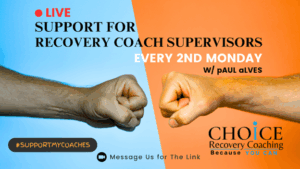
Supervise Peers or Recovery Coaches?
GOT FOOD?
Here are a list of food resources across the Commonwealth near you. Please share with those in need across our Communities.
NORTH EASTERN Massachusetts
WORCESTOR Massachusetts
Western Massachusetts Food Finder
Project Bread
Find a Food Pantry in Massachusetts
JOB POSTINGS:
Here are a few current recovery-related positions:
RSC Recovery Coach: https://recruiting.paylocity.com/Recruiting/Jobs/Details/3227420
RSC Member Engagement Coordinator: https://recruiting.paylocity.com/Recruiting/Jobs/Details/3457405
Recovery Support Navigator: https://recruiting.paylocity.com/Recruiting/Jobs/Details/3359460
You can also view all of our openings on our LinkedIn page. https://www.linkedin.com/company/sfhboston/jobs/